About the Author: So Wai

Introduction: Listening — an Active Process at the Heart of Musical Expression
In musical discourse, we readily speak of technique, interpretation, and practice strategies.
Yet behind these visible concerns lies an even more fundamental skill: listening.
It is neither a late addition nor a secondary gesture. It forms the very foundation of all musical practise.
Without attentive listening to oneself, it becomes impossible to refine one’s tone, shape a musical phrase, or ensure coherence between intention and outcome.
Without listening to others, ensemble music-making is reduced to mere mechanical coordination, stripped of any real dialogue.
And without listening to the outside world—concerts, recordings, other artists—our imagination closes in on itself, and creativity is diminished.
Listening is therefore not a passive state. It is a conscious, demanding act, directly connected to the body.
It guides every interpretative decision, influences the quality of sound, and shapes our understanding of the musical text.
To return to listening is to return to what truly matters: the musician’s primary tool, upon which everything else depends.
Listening to One’s Own Playing: Hearing Beyond the Notes
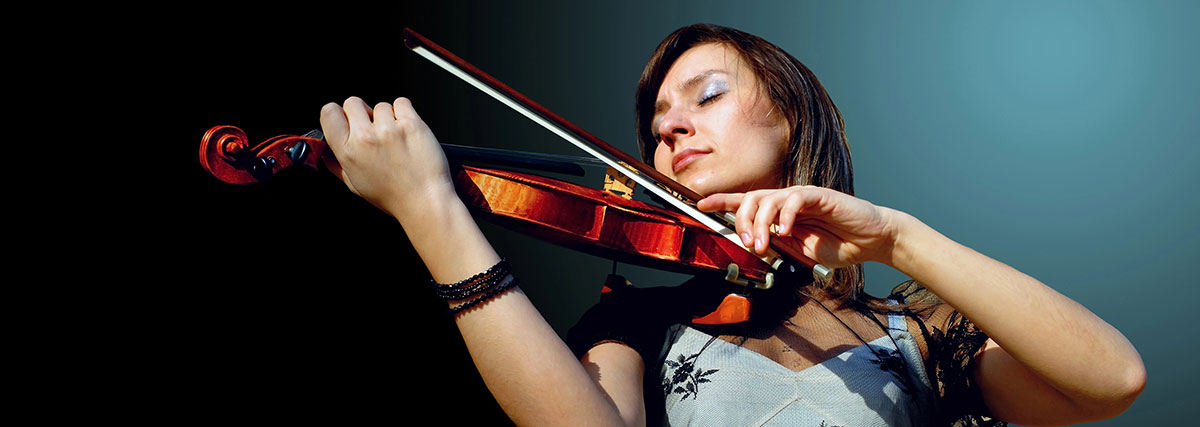
For many musicians, the first real challenge lies in learning to listen to their own playing with precision and objectivity.
It goes well beyond merely correcting mistakes.
It involves paying close attention to the quality of tone, intonation, rhythmic stability, and the shaping of musical phrases.
These elements form the foundation of any interpretation, yet they are often pushed into the background when the focus is placed primarily on technique or on the desire to “do well.”
Listening to oneself rests on four essential dimensions.
First, the sound: is it centred, stable, and consistent with the desired tonal colour?
Next, intonation: do we respond naturally to the micro-adjustments required?
Then rhythm: is the pulse solid, flexible, and well shaped?
Finally, phrasing: does our musical line breathe, move forward, and have a clear sense of direction?
When listening becomes an active tool in daily practice, the nature of practise itself changes.
Rather than repeating mechanically, we begin to understand what our instrument is actually producing and what needs to be corrected.
This transition from automatic playing to conscious playing is one of the keys to lasting progress.
Many young musicians hear their teachers tell them, “listen more carefully,” without always understanding what that actually means.
The idea can seem abstract, until the day something changes: we begin to perceive previously unnoticed subtleties—shades of tone, tendencies in intonation, and the true direction of a musical phrase.
To develop this form of listening, several simple methods can be used.
Practising slowly and in small sections, focusing solely on the quality of sound, is a powerful tool.
Recording one’s playing regularly also makes it possible to gain perspective; listening back often reveals aspects that the intensity of the moment prevents us from noticing.
Gradually, this ability becomes instinctive: we hear not only what is actually happening, but also what we wish to bring into being.
The ear then becomes a reliable guide, both in the practice room and on stage.
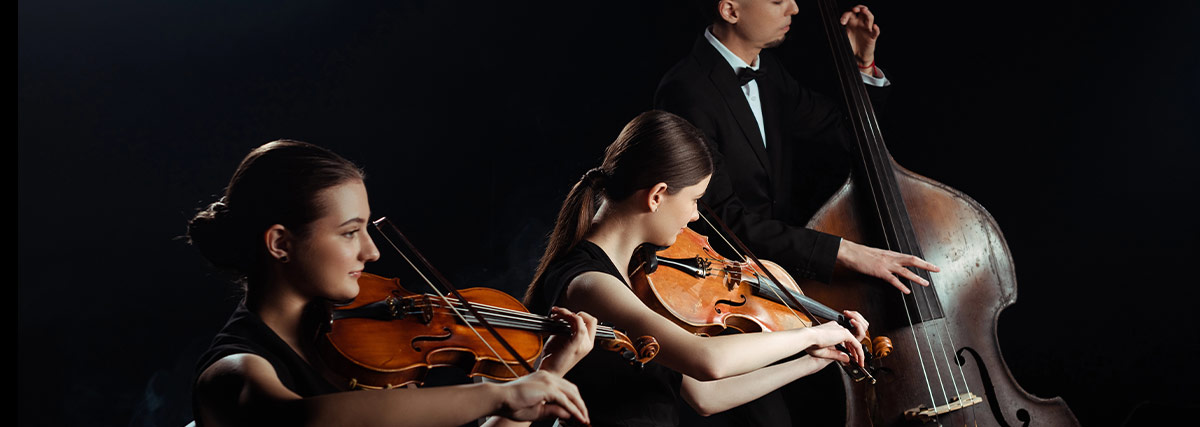
Listening in Ensemble Music: Communicating Without Words
Playing with other musicians requires listening to evolve.
The focus is no longer solely on one’s own tone, but on how it fits within the whole—how it responds, adapts, and blends into the collective.
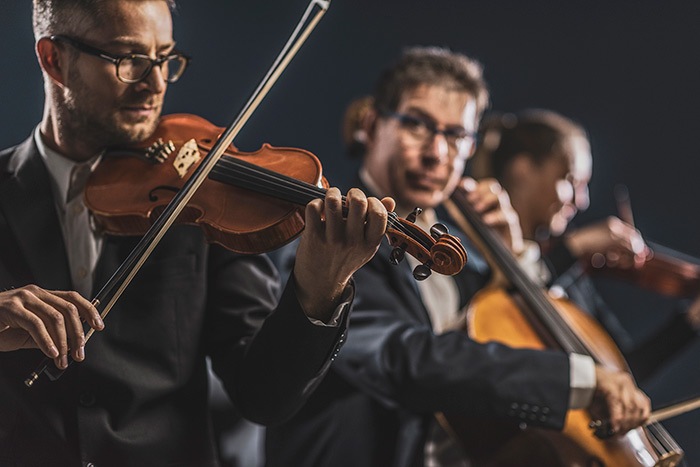
In a quartet, an orchestra, or a chamber ensemble, each player’s role extends far beyond the mere production of notes.
Listening becomes a way of belonging to the group.
In ensemble playing, listening is tantamount to communication.
On adapte son articulation, sa couleur, sa dynamique.
We sense when to lead the phrase and when, by contrast, to step back.
We breathe with the others, as if several performers were sharing a single breath.
When this mutual listening is in place, music ceases to be a mere juxtaposition of lines and becomes a conversation.
Encountering new musical partners brings forth other ways of phrasing, as well as different conceptions of sound and time.
Each collaboration encourages us to broaden our points of reference and to question our habits.
Listening then becomes a tool for personal transformation, extending far beyond purely technical or collective considerations.
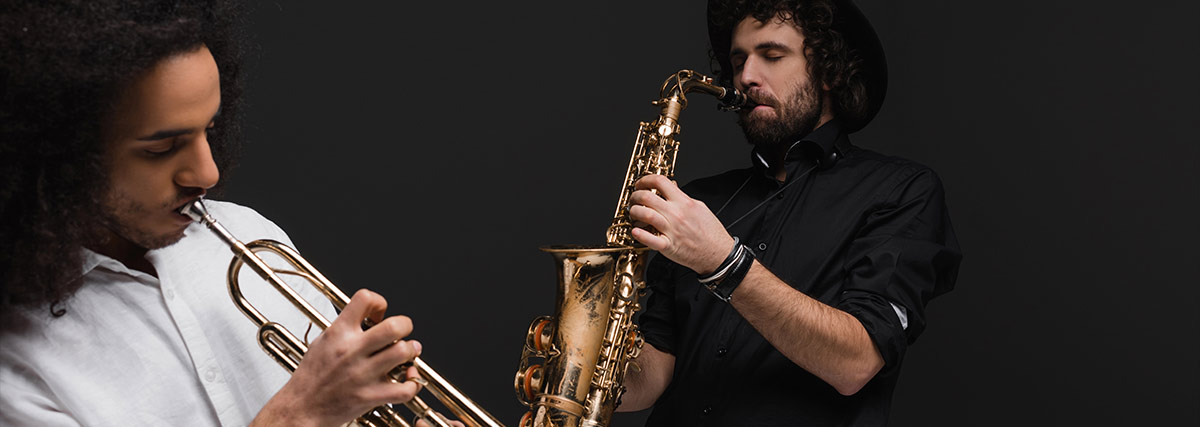
Listening to Others: Shaping One’s Musical Taste
No musician shapes their style in isolation. Artistic identity is formed as much through personal practice as through what we absorb from the outside world.
Listening to great performers—saxophonists, pianists, violinists, singers—as well as to a wide range of styles such as classical music, jazz, or church music, broadens our sense of what is possible.
It offers new colours, new ways of articulating, shaping time, and expressing musical ideas.
But this listening must be intentional. Active listening invites us to question the details: why does a particular interpretation move me?
How does this musician shape a natural crescendo?
What do singers do to bring a simple line to life?
These questions feed analysis and, over time, shape artistic development.
Gradually, the music we hear becomes an inner resource.
It shapes our sonic concept, refines our sense of style, and enriches our expressive vocabulary.
Listening to others is not about imitation; it is an essential source of nourishment for developing a personal musical voice.

Practising with Ears Wide Open: Training a More Refined Listening Skill
Listening is not a mysterious gift; it is a skill that can be trained and strengthened through regular practise.
One of the most effective methods is to record oneself frequently.
The microphone acts as a revealer: it exposes unintentional accelerations, lapses in pitch, and the gaps between intention and result.
This confrontation with sonic reality allows for faster progress than hours of automatic repetition.
Slow practise is also a valuable tool.
Long notes, slow scales, and conscious articulation create a space in which the ear can analyse what the sound truly contains: its stability, its core, and its resonance.
Practising slowly trains the ear as much as it does technique.
Singing is another essential method.
Singing a phrase before playing it activates the inner ear, the auditory image that precedes instrumental action.
The ear then becomes a kind of guiding blueprint to which the instrument must conform.
Many musicians underestimate the power of this practice.
Comparative listening—listening to several interpretations of the same work—also develops perception.
It shows how the same score can be transformed radically through choices of articulation, colour, or rubato.
Finally, nothing develops listening more quickly than chamber music, which demands constant attention: responding, anticipating, adjusting, and breathing together.
The ultimate aim is for listening to become an active partner in instrumental practise.
The ear should not merely detect problems, but also suggest solutions, refine artistic choices, and stimulate the sonic imagination.
Conclusion: Listening as the Foundation of Musical Development
In the end, everything comes back to a fundamental act: listening.
Technique gives us the means, interpretation provides direction, but listening brings the truth: the truth of what we produce, what others offer, and what the music truly demands.
A musician who listens deeply plays differently: shaping tone with intention, connecting more naturally with others, and building a richer artistic identity.
Listening makes practice more effective, performances more alive, and the imagination broader.
It is neither automatic nor passive; it is a discipline, an attitude, a way of being present—whether in the rehearsal room, on stage, or in the audience.
It develops patience, humility, curiosity, and perceptual sensitivity. It teaches us as much about music as it does about ourselves.
If there is one idea every musician—beginner, amateur, or professional—should return to regularly, it is this: the ear is our most powerful instrument, and everything else flows from it.
Cultivating the art of listening is about far more than improving one’s playing.
It is about broadening one’s musical world, strengthening artistic identity, and opening the way to a lifetime of growth.

When the Saxophone Became the Voice of 1980s Hong Kong Pop
For my grandfather, with all my love and in loving memory I returned to Hong Kong for two weeks for family reasons, in order to attend my grandfather’s funeral. During this period, I had the opportunity to reconnect with many relatives whom I had not seen for years. [...]

How to Keep Your Saxophone in Perfect Condition: A Guide to Care and Maintenance
The saxophone is both a delicate and complex instrument. For it to perform at its very best, thorough maintenance is essential. Regular care not only extends its lifespan, but also ensures it continues to perform reliably and beautifully. [...]
17 m², a saxophone, and letters of apology to the neighbours: the truth and poetry of an adult learning music in Paris
We often imagine that coming to study music in Paris feels like a scene from a film: sunlight on the Seine, the smell of coffee in the air, and the sound of a saxophone carried on the breeze. [...]
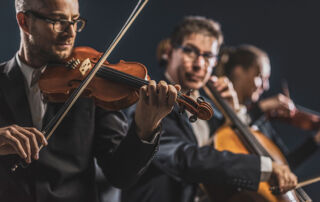
The Art of Listening in the Musician
Introduction: Listening — an Active Act at the Heart of Musical Expression In musical discourse, we readily speak of technique, interpretation, or practice strategies. Yet behind these visible concerns lies… [...]
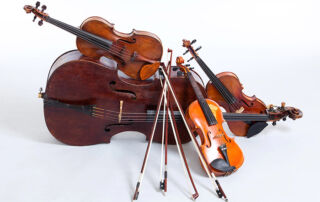
Three Accessories for String Instruments
Here is a brief presentation of three very useful accessories for string playing: the metronome, the tuner and the mute. The metronome — what is it? This device is an apparatus… [...]

Playing with the heart or with the mind? A reflection on the meaning of musical interpretation
Have you ever felt that, while your technique was solid when playing a piece, the music still sounded hollow? Or that, when pouring all your emotion into it, your technical limitations prevented you from fully expressing your ideas? [...]