About the author: So Wai

For many listeners, the saxophone evokes jazz clubs, improvised solos and the warmth of a tenor melody. Its classical identity is less well known.
Yet the instrument also has a tradition of carefully shaped phrases, chamber music and a demanding concert repertoire.
Few musicians did as much to establish this identity in the twentieth century as Marcel Mule.
As a performer, teacher and arranger, Mule helped to create the conditions in which classical saxophonists could flourish: a repertoire to perform, an artistic model and a place to study.
His story therefore goes beyond the biography of an exceptional musician.
It offers insight into how an instrumental tradition is built.

From First Lessons to Professional Life
Born in 1901 in Aube, Normandy, Marcel Mule he discovered music as a child through the saxophone, violin and piano.
His father, a bandmaster, gave him his first lessons.
In 1923, he joined the Band of the Republican Guard, an important step in his career.
His musical world was not confined to a single style.
According to Henri SELMER Paris, it was after hearing vibrato in jazz orchestras in the late 1920s that he began experimenting with it himself.
He gradually incorporated it into his classical playing, helping to establish an expressive approach that would remain closely associated with his name.
This exchange between musical worlds is worth highlighting.
Building a classical tradition does not necessarily mean shutting out other influences.
For Mule, encountering another musical practice opened up new expressive possibilities.
Four Saxophones, One Chamber Ensemble
Mule’s quartet, initially associated with the Republican Guard and later known as the Quatuor de Paris, also played an important part in his career.
It brought the saxophone into the intimate setting of chamber music, where the dialogue between performers matters as much as individual virtuosity.
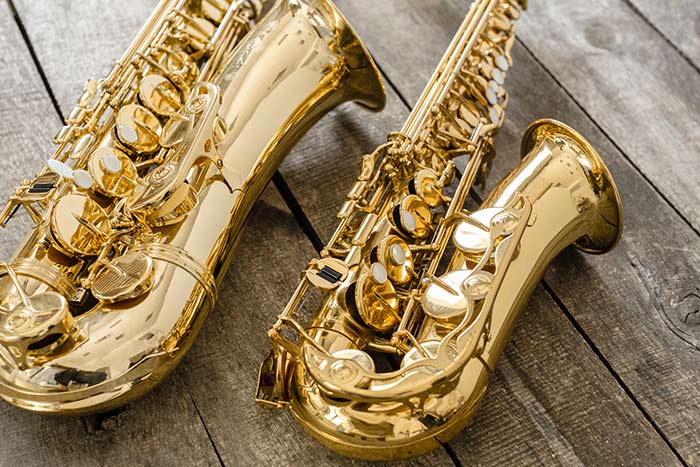
A saxophone quartet comprises soprano, alto, tenor and baritone.
Their contrasting registers allow the melody to pass between the voices, while their shared instrumental family enables their timbres to blend.
For audiences accustomed to hearing a solo saxophone, this combination reveals an entirely different soundscape.
Mule’s influence also helped to enrich the repertoire for this ensemble.
Works associated with his ensemble include Jean Rivier’s Grave et Presto, Eugène Bozza’s Andante et Scherzo and Alfred Desenclos’s Quatuor.
They illustrate the role performers can play in developing a musical ensemble by giving composers a group for which to write.

Sound Before Showmanship
Mule’s approach was distinguished by more than technical mastery alone.
Sound quality was central to it.
In an interview with Vandoren Magazine, he described his progression from tense, physically tiring playing towards greater ease and flexibility.
Although he valued equipment that enhanced comfort and sound quality, he refused to pursue power or ease of tone production at the expense of a beautiful timbre.
For a beginner, this distinction is invaluable.
Progress is easily measured by the speed of scales or mastery of high notes.
It is more difficult to assess the shaping of a phrase or the evenness of a softly played passage.
Yet these less spectacular qualities are often what make a performance convincing.
His former student Eugene Rousseau recalled that Mule applied the same exacting standards to articulation.
When short notes lost their tonal quality, he would ask the student to play the passage legato, then recapture the same sound in the articulated version.
Technique remained inseparable from the musical result.

A Class with a Lasting Influence
In 1942, Claude Delvincourt, director of the Paris Conservatoire, entrusted Mule with the institution’s saxophone class.
For more than twenty-five years, he passed on his experience to several generations of musicians.
The Conservatoire describes him as a founding figure of the French school of saxophone playing.
The significance of this appointment extended far beyond the walls of the classroom.
A conservatoire class ensures continuity: students train, become performers and teachers, then pass on what they have learnt in other institutions.
In this way, a personal approach can gradually become a shared musical language.
Rousseau’s account offers a vivid insight into these lessons.
Mule would play passages, discuss matters of style and tempo, and annotate the scores.
When a fast passage seemed beyond reach, he encouraged his student to practise very short fragments at the intended tempo before putting them together.
His teaching made demanding music approachable through clear, progressive goals.

Building a Repertoire
An instrument needs more than accomplished performers: it also needs music worthy of their commitment.
Through his work as an arranger and performer, Mule helped to broaden the musical resources available to saxophonists.
Alongside original compositions, his transcriptions brought works by Bach, Lully and Debussy into their repertoire.
Research by Audrey Elizabeth Cupples at the University of Maryland highlights the importance of this interplay between quartets, solo works and transcriptions in Mule’s influence on the saxophone repertoire.
For students, these arrangements represent far more than new pieces to learn.
They invite reflection on style: how should a phrase breathe?
Where should a musical line be heading?
How can a wind instrument suggest a texture originally conceived for another instrument?
These are lessons in interpretation, not merely exercises in fingering.
A Legacy Beyond Imitation
Marcel Mule died in 2001, leaving behind a name inseparable from the development of the French classical saxophone tradition.
Honouring this legacy does not mean that every musician must reproduce his sound.
Instead, his recordings can serve as starting points for attentive listening: observing how a phrase is shaped, the clarity of the articulation and the way expression emerges from carefully controlled musical choices.
For adults discovering the saxophone, his journey offers an encouraging perspective.
Learning is not simply about mastering an instrument: it also means taking part in a dialogue between performers, teachers and composers.
Mule helped to enrich that dialogue.
His lasting contribution lies as much in what he played as in the possibilities he opened up for those who followed him.
Would you like to discover the saxophone or improve your playing?
Join our adult courses at the Paris Music Institute and progress at your own pace with a dedicated teacher.

Marcel Mule: the man who shaped the French school of classical saxophone
For many listeners, the saxophone evokes jazz clubs, improvised solos and the warmth of a tenor melody. Its classical identity is less well known. Yet the instrument also has a [...]
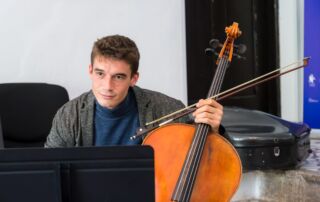
Interview with cellist and teacher Vlad Câmpean
In this interview, Vlad Câmpean, a cellist trained at the Conservatoire National Supérieur de Musique et de Danse de Paris, looks back on his journey, from his first steps at the age of six in Cluj-Napoca [...]

How to Improve Intonation on the Saxophone
Unlike fixed-pitch instruments such as the piano, the saxophone does not produce perfectly stable intonation on its own. As a wind instrument, its pitch is constantly influenced by the player: [...]

How to Choose Your First Saxophone Mouthpiece: A Beginner’s Guide
When buying your first saxophone, you often spend a great deal of time comparing different instruments. Yet one of the most important elements is often the mouthpiece. Although it is... [...]

How Often Should You Change Your Reed?
The reed is one of the most discreet elements of a saxophonist’s equipment, yet its influence on sound and playing quality is considerable. Placed on the mouthpiece, this thin strip of reed... [...]

Alto or tenor saxophone: which instrument should an adult choose in Paris?
Starting to learn the saxophone is an exciting decision. However, for many adult beginners, one question quickly arises: which instrument should you choose? Among the different types of saxophone, the alto... [...]
SIMILAR ARTICLES