About the Author: So Wai

I returned to Hong Kong for two weeks for family reasons in order to attend my grandfather’s funeral.
During this short stay, I had the opportunity to reconnect with many relatives whom I had not seen for years.
As is often the case during family gatherings, our conversations naturally turned to our respective lives.
When they learned that I was studying and playing the saxophone, many became curious and asked me to play a piece for them.
As our conversations about music continued, I noticed something interesting.
Several relatives mentioned classic Hong Kong songs from the 1980s and 1990s, and many associated these pieces with the sound of the saxophone.
Some even suggested that I play melodies such as Endless Love (新不了情).
At that moment, I realised that for many people in Hong Kong, the saxophone is closely linked to the musical memories of that era.
This brief moment sparked my curiosity.
Why does the saxophone appear so often in the music that people remember from that period?
What role did it play in shaping the sound of Hong Kong pop?
Upon returning home, I began to explore the relationship between the saxophone and Hong Kong popular music of the 1980s and 1990s.
What I discovered reveals how a single instrument became an emblematic voice of the musical identity of an entire generation.
The Iconic Sound of 1980s Pop
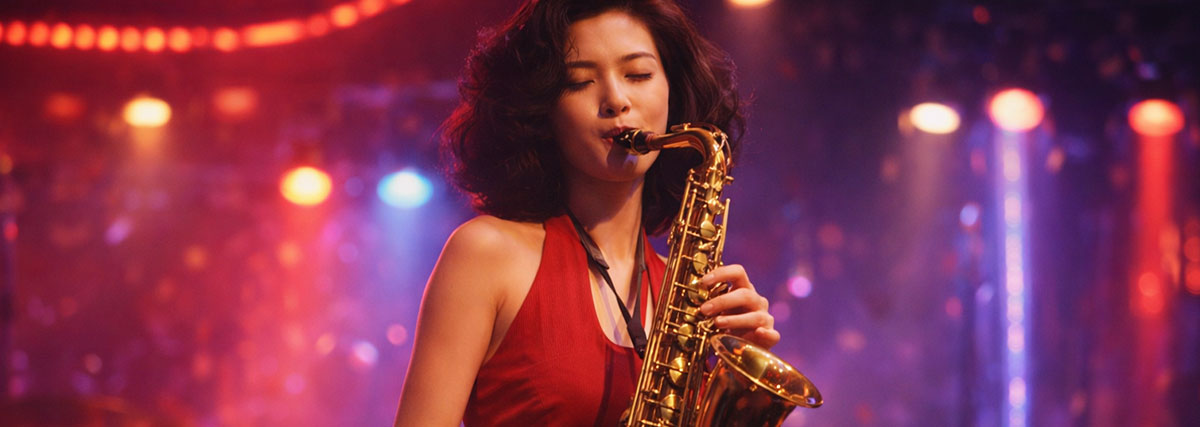
In 1980s Cantopop arrangements, the saxophone was often used to perform melodic interludes or highly expressive solos.
Many songs featured a saxophone solo after the chorus, extending the emotional narrative of the piece while adding depth and richness to the overall sound.
This approach was strongly influenced by the Western musical trends of the time.
During the 1970s and 1980s, the saxophone held an important place in jazz, fusion, soft rock, and popular music.
As an international city, Hong Kong naturally absorbed these influences, and local producers and arrangers began incorporating the saxophone into pop music.
Hong Kong pop of the 1980s not only shaped the local market but also influenced the wider Chinese-speaking world.
After China’s opening up, mainland audiences were introduced to an influx of popular music from Hong Kong and Taiwan.
As these songs spread, the saxophone gradually established itself within the arrangements of Mandarin pop.
From the late 1980s to the early 1990s, many pop songs, television drama soundtracks, and light music albums prominently featured the saxophone.
Some albums were even entirely devoted to saxophone interpretations of popular songs, reflecting the instrument’s popularity both as a solo voice and within ensembles.
Endless Love (新不了情) and the Saxophone
Endless Love (新不了情), originally performed by the Taiwanese singer Wanfang, later became the theme song of the Hong Kong film of the same name released in 1993.
The film tells the story of a young couple confronted with love and loss, exploring themes of nostalgia, memory, and emotional resilience.
In the film, the character portrayed by Lau Ching-wan (劉青雲) is a street saxophonist whose music often reflects the inner emotions of the protagonists.
One particularly memorable scene shows Lau Ching-wan performing Endless Love in the streets while the heroine reflects on her past and the opportunities she has missed.
The melancholy and warmth of the saxophone perfectly capture the bittersweet tone of the moment, blending seamlessly with the narrative.
It is through scenes like these that the saxophone transcends its role as a mere instrument to become a vehicle of emotion, expressing what words alone cannot convey.
For many listeners in Hong Kong, Endless Love is inseparable from the warm and expressive sound of the saxophone.
Lau Ching-wan’s street performance demonstrates how the instrument can convey emotion and atmosphere, transforming a simple melody into a vivid emotional experience.
This expressive capacity helped make the saxophone an iconic element of 1980s Hong Kong pop.
Whether in the gentle interludes of a love song or in the soulful solos of pop music, the saxophone brought texture, colour, and emotional depth to the city’s music, becoming a sonic symbol of a generation.
Another Emblematic Melody: The Moon Represents My Heart and the Saxophone
Another timeless classic is The Moon Represents My Heart (月亮代表我的心), performed by Teresa Teng (鄧麗君).
This gentle ballad expresses deep feelings of care, devotion, and sincere affection, often perceived as a heartfelt message to a loved one.
The lyrics use the metaphor of the moon to symbolise the constancy and depth of inner feelings.
In many interpretations in Hong Kong, the saxophone accompanies the melody, adding a voice that seems to speak directly to the heart.
The instrument’s soft and intimate timbre enhances the emotional depth, making the sincerity and closeness expressed by the song almost tangible.
For me, this song holds a deeply personal resonance.
During my recent visit to Hong Kong for my grandfather’s funeral, I was reminded of how music can express what words cannot always say.
If I had the opportunity, I would like to play The Moon Represents My Heart on the saxophone as a tribute to him, conveying affection, respect, and gratitude through music.
Just as the saxophone carried emotion throughout Hong Kong pop of the 1980s, here it becomes a bridge between generations, connecting my feelings with those of my grandfather, transcending words and giving voice to what I carry in my heart.

The Health Benefits of Playing the Saxophone as an Adult
In today’s fast-paced and demanding world, many adults often find themselves stuck in a routine, searching for passion or personal fulfilment. Learning to play a musical instrument [...]

S.O.S. I don’t know how to breathe
Among the questions I hear most frequently from my students, one that often comes up is: how should I breathe when singing? And you? Do you know how? [...]

The History of the Saxophone: From Classical to Jazz
When you think of the saxophone, jazz probably comes to mind. Its deep melodies and vibrant improvisations have become synonymous with this musical genre. But did you know that the saxophone has [...]

Essential Accessories for Every New Saxophonist
Embarking on the journey of learning the saxophone is an exciting experience, and having the right tools is essential to make it enjoyable and rewarding. Key accessories such as mouthpieces, reeds [...]

3 of the greatest singers
Photo : « Photo de Maria Callas en 1958 de l'émission télévisée "Small World". Le programme a été présenté par Edward R. Murrow. » par Télévision CBS. Sous licence Domaine public. Maria [...]

Which saxophone should an adult beginner start with?
Did you know that the saxophone family includes more than eight different types, each with its own unique sound? Today, however, four types are the most popular: the soprano, alto, tenor, and baritone saxophones. [...]
SIMILAR ARTICLES