When most people buy their first saxophone, they spend hours comparing different instruments. Surprisingly, one of the most important parts of the setup is the mouthpiece.
Although it is small, the mouthpiece has an enormous impact on your sound, comfort, and overall playing experience.
Two players using exactly the same saxophone can sound remarkably different simply because they are using different mouthpieces.
If you have started researching mouthpieces, you have probably come across countless brands, model names, and technical terms such as tip opening, chamber, and facing.
At first, it can all seem confusing.
In this guide, we will explain the basics of saxophone mouthpieces, introduce several popular classical models, and help you understand which characteristics are most important for beginners.

Why Is the Mouthpiece So Important?
Think of the mouthpiece as the voice of the saxophone.
While the instrument provides resonance, it is the mouthpiece that determines how the reed vibrates.
It directly influences tone, response, articulation, intonation and playing comfort.
A suitable mouthpiece can help you:
- Produce a clear and stable sound.
- Develop good breath support.
- Improve intonation.
- Make high and low notes easier to play.
- Learn proper embouchure more efficiently.
On the other hand, a mouthpiece that is too demanding can make learning unnecessarily difficult.
Many beginners mistakenly believe that professional players always use mouthpieces with larger openings or more powerful designs.
In reality, professionals simply choose equipment that matches their individual playing style and musical goals.
For your first mouthpiece, consistency and control are much more important than volume or projection.
Understanding Tip Opening
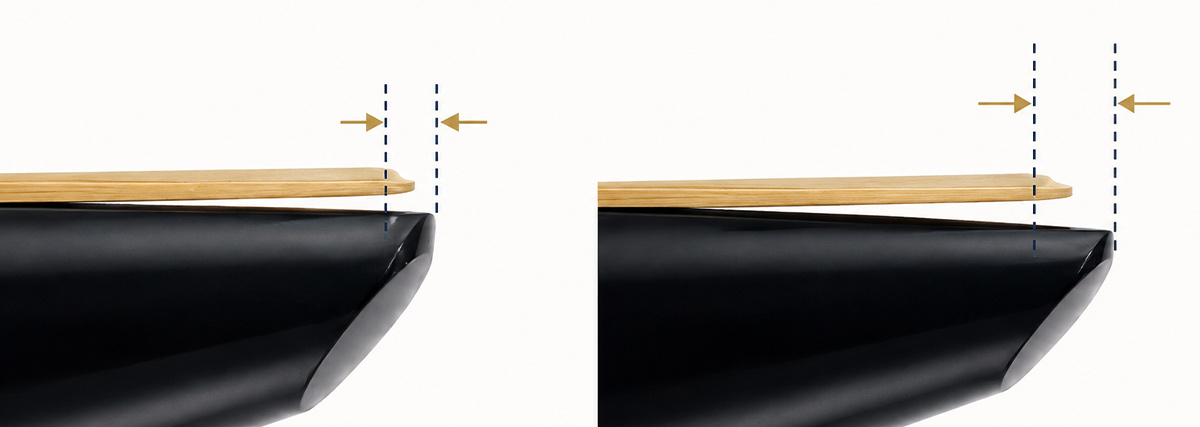
One of the most important criteria is the tip opening, which is the distance between the tip of the reed and the tip of the mouthpiece.
Even though this difference may only be a few fractions of a millimetre, it can significantly affect how the mouthpiece feels to play.
- Smaller tip openings provide more resistance, making the sound easier to focus and control. They are often recommended for classical playing and are particularly suitable for beginners. They tend to produce a sweeter, more centred tone with excellent clarity. To achieve the best sound, the player needs to maintain a well-focused and controlled airstream rather than simply blowing harder.
- Larger tip openings offer greater flexibility and can produce a broader, more powerful sound with increased brightness and projection. However, they usually require stronger breath support, greater embouchure control, and more developed technique to play comfortably.
There is no “best” tip opening.
The choice depends on your level, reed strength, musical style and personal preferences.
Selmer S90
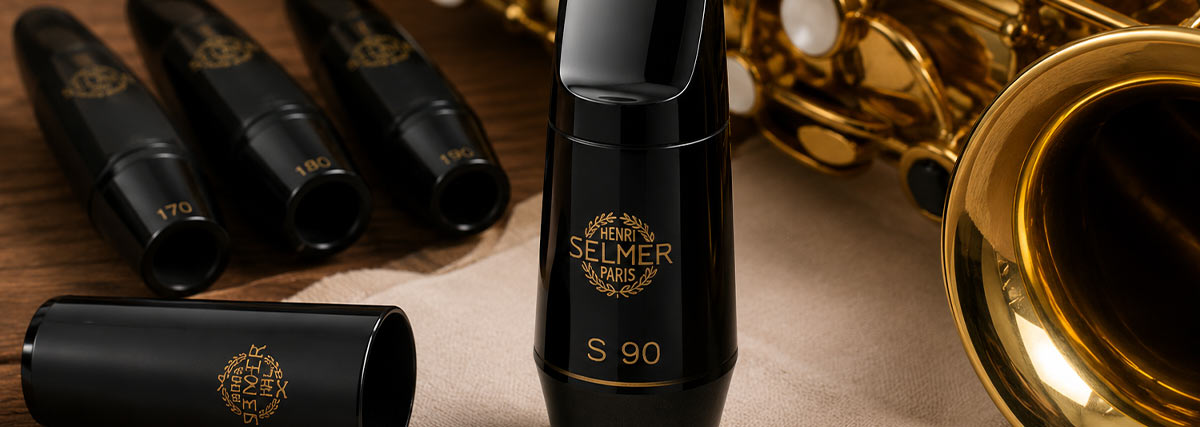
The Selmer S90 has long been considered one of the standard classical saxophone mouthpieces.
It is widely used in conservatories and by professional classical saxophonists around the world.
The S90 is available in several tip openings, including 170, 180, and 190.
As the number increases, the tip opening becomes slightly larger.
The S90 is appreciated for its very centred, pure and precise sound.
It offers excellent stability as well as very good intonation.
From my own experience, the S90 helps me focus my airstream efficiently.
The resistance feels balanced, allowing the air to flow smoothly while maintaining excellent control.
The result is a refined, elegant and stable sound, particularly suited to classical music.
For students who are still learning breath support and embouchure control, the S90 offers a forgiving and dependable playing experience.
Selmer Concept
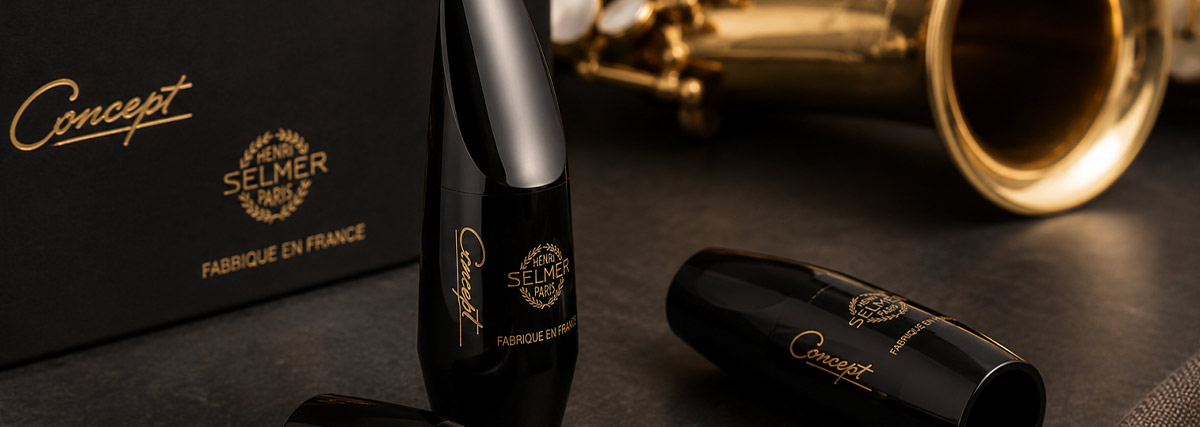
The Selmer Concept represents a more modern approach to classical mouthpiece design.
Compared with the S90, the Concept generally produces a warmer, rounder, and more colourful sound.
Many players also notice that it offers greater flexibility when shaping musical phrases and dynamics.
While remaining very precise, it offers a broader tonal palette, which explains its popularity among advanced students and professionals.
Beginners looking for a naturally warmer sound may also find it an excellent choice.
Selmer Density
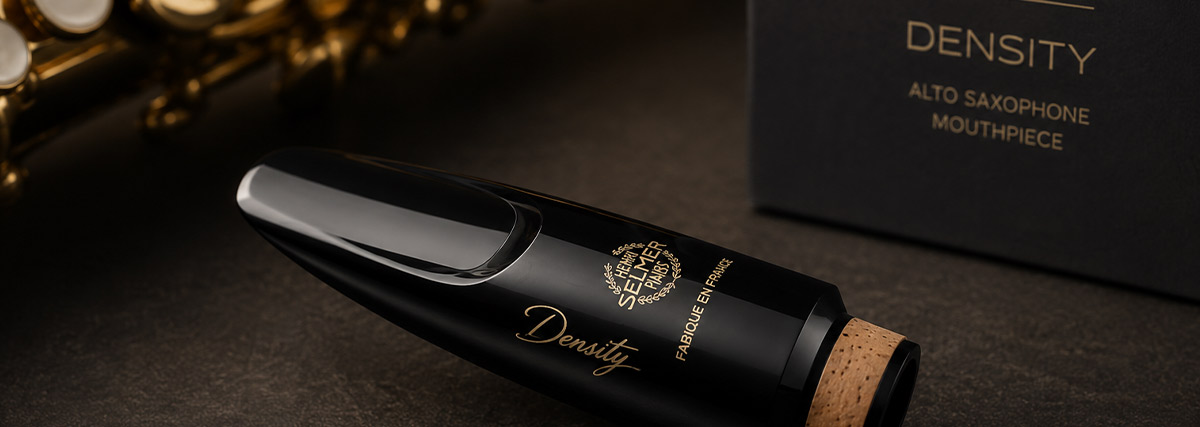
The Selmer Density is one of Selmer’s newest classical mouthpieces.
Designed using modern acoustic research, it combines a focused core sound with impressive richness and projection.
Many players describe the Density as offering both precision and flexibility without sacrificing tonal depth.
Although it is often chosen by experienced musicians, it may also suit motivated beginners.
Vandoren AP3
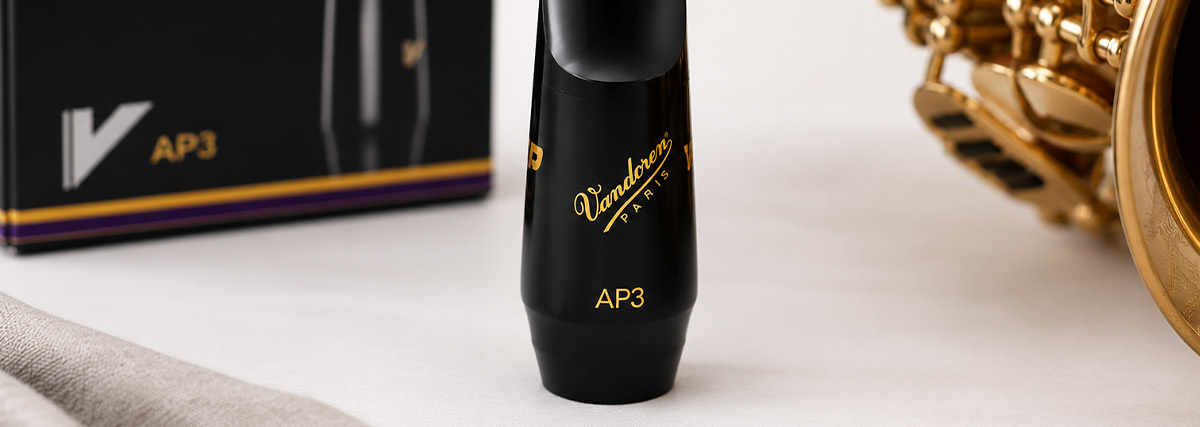
The Vandoren AP3 has become one of the most highly regarded classical mouthpieces in recent years.
Its sound is naturally warm, round, and resonant.
One quality I particularly appreciate is the way it encourages proper breathing.
Compared with some other mouthpieces, the AP3 requires the player to maintain a steady, well-supported airflow.
Rather than making playing more difficult, this characteristic actually helps students develop healthier breathing habits.
As your air support improves, the mouthpiece rewards you with a rich, full tone and excellent resonance throughout the instrument.
For players who want to build strong technical fundamentals while developing a beautiful classical sound, the AP3 is an outstanding option.
Don’t Forget the Reed
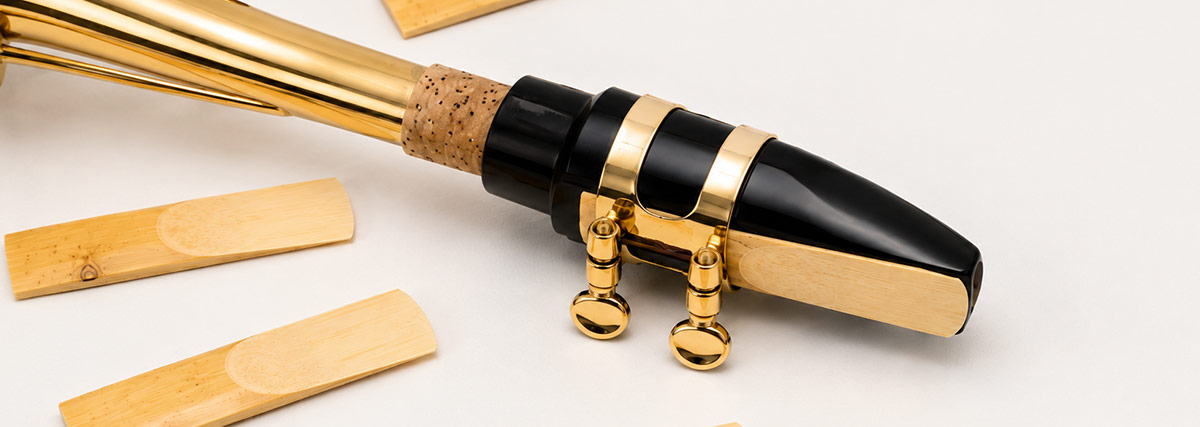
Choosing the right mouthpiece also means choosing an appropriate reed.
The mouthpiece and reed work together: a mouthpiece that feels perfect with one reed may respond very differently with another.
Personally, I recommend the Vandoren Traditional or V12 series.
As a beginner, it is usually best to start with medium-strength reeds recommended by your teacher or the mouthpiece manufacturer.
Avoid changing several variables at once, as this makes it difficult to identify what is actually affecting your playing.

My Advice for Beginners
When buying your first mouthpiece, do not look for the “perfect” model, as it simply does not exist.
Each mouthpiece has its own character.
Preferences vary according to each player’s embouchure, breath control, musical style and ideal sound.
Many saxophonists own several mouthpieces.
They choose a different model depending on the repertoire, the musical context, or simply how they feel at the time.
With experience, your preferences will naturally evolve.
Instead of searching for the “best” mouthpiece, choose the one that feels most comfortable and allows you to produce a stable, consistent sound without excessive effort.
A focused tone, reliable intonation, and an even response across the full range of the instrument will help you build a strong technical foundation far more effectively than simply chasing the loudest or brightest sound.
Whenever possible, visit a music shop and try several mouthpieces using the same saxophone and the same reed strength.
This allows you to make a fair comparison.
Even two mouthpieces of the same model can feel slightly different due to manufacturing variations, so personal comfort should always be one of the deciding factors.
Remember that your first mouthpiece is simply the beginning of your musical journey, it does not have to be your last.
As your embouchure, breath control, and artistic vision continue to grow, you may naturally discover that another mouthpiece better suits your playing.
Ultimately, the best mouthpiece is the one that inspires you to practise, gives you confidence when you play, and helps you express your musical ideas with ease.
Build strong fundamentals first, and your equipment can continue to evolve alongside you throughout your musical journey.

About the Author: So Wai
When most people buy their first saxophone, they spend hours comparing different instruments. Surprisingly, one of the most important parts of the setup is the mouthpiece.
Although it is small, the mouthpiece has an enormous impact on your sound, comfort, and overall playing experience.
Two players using exactly the same saxophone can sound remarkably different simply because they are using different mouthpieces.
If you have started researching mouthpieces, you have probably come across countless brands, model names, and technical terms such as tip opening, chamber, and facing.
At first, it can all seem confusing.
In this guide, we will explain the basics of saxophone mouthpieces, introduce several popular classical models, and help you understand which characteristics are most important for beginners.
Why Is the Mouthpiece So Important?
Think of the mouthpiece as the voice of the saxophone.
While the instrument provides resonance, it is the mouthpiece that determines how the reed vibrates.
It directly influences tone, response, articulation, intonation and playing comfort.
A suitable mouthpiece can help you:
On the other hand, a mouthpiece that is too demanding can make learning unnecessarily difficult.
Many beginners mistakenly believe that professional players always use mouthpieces with larger openings or more powerful designs.
In reality, professionals simply choose equipment that matches their individual playing style and musical goals.
For your first mouthpiece, consistency and control are much more important than volume or projection.
Understanding Tip Opening
One of the most important criteria is the tip opening, which is the distance between the tip of the reed and the tip of the mouthpiece.
Even though this difference may only be a few fractions of a millimetre, it can significantly affect how the mouthpiece feels to play.
There is no “best” tip opening.
The choice depends on your level, reed strength, musical style and personal preferences.
Selmer S90
The Selmer S90 has long been considered one of the standard classical saxophone mouthpieces.
It is widely used in conservatories and by professional classical saxophonists around the world.
The S90 is available in several tip openings, including 170, 180, and 190.
As the number increases, the tip opening becomes slightly larger.
The S90 is appreciated for its very centred, pure and precise sound.
It offers excellent stability as well as very good intonation.
From my own experience, the S90 helps me focus my airstream efficiently.
The resistance feels balanced, allowing the air to flow smoothly while maintaining excellent control.
The result is a refined, elegant and stable sound, particularly suited to classical music.
For students who are still learning breath support and embouchure control, the S90 offers a forgiving and dependable playing experience.
Selmer Concept
The Selmer Concept represents a more modern approach to classical mouthpiece design.
Compared with the S90, the Concept generally produces a warmer, rounder, and more colourful sound.
Many players also notice that it offers greater flexibility when shaping musical phrases and dynamics.
While remaining very precise, it offers a broader tonal palette, which explains its popularity among advanced students and professionals.
Beginners looking for a naturally warmer sound may also find it an excellent choice.
Selmer Density
The Selmer Density is one of Selmer’s newest classical mouthpieces.
Designed using modern acoustic research, it combines a focused core sound with impressive richness and projection.
Many players describe the Density as offering both precision and flexibility without sacrificing tonal depth.
Although it is often chosen by experienced musicians, it may also suit motivated beginners.
Vandoren AP3
The Vandoren AP3 has become one of the most highly regarded classical mouthpieces in recent years.
Its sound is naturally warm, round, and resonant.
One quality I particularly appreciate is the way it encourages proper breathing.
Compared with some other mouthpieces, the AP3 requires the player to maintain a steady, well-supported airflow.
Rather than making playing more difficult, this characteristic actually helps students develop healthier breathing habits.
As your air support improves, the mouthpiece rewards you with a rich, full tone and excellent resonance throughout the instrument.
For players who want to build strong technical fundamentals while developing a beautiful classical sound, the AP3 is an outstanding option.
Don’t Forget the Reed
Choosing the right mouthpiece also means choosing an appropriate reed.
The mouthpiece and reed work together: a mouthpiece that feels perfect with one reed may respond very differently with another.
Personally, I recommend the Vandoren Traditional or V12 series.
As a beginner, it is usually best to start with medium-strength reeds recommended by your teacher or the mouthpiece manufacturer.
Avoid changing several variables at once, as this makes it difficult to identify what is actually affecting your playing.
My Advice for Beginners
When buying your first mouthpiece, do not look for the “perfect” model, as it simply does not exist.
Each mouthpiece has its own character.
Preferences vary according to each player’s embouchure, breath control, musical style and ideal sound.
Many saxophonists own several mouthpieces.
They choose a different model depending on the repertoire, the musical context, or simply how they feel at the time.
With experience, your preferences will naturally evolve.
Instead of searching for the “best” mouthpiece, choose the one that feels most comfortable and allows you to produce a stable, consistent sound without excessive effort.
A focused tone, reliable intonation, and an even response across the full range of the instrument will help you build a strong technical foundation far more effectively than simply chasing the loudest or brightest sound.
Whenever possible, visit a music shop and try several mouthpieces using the same saxophone and the same reed strength.
This allows you to make a fair comparison.
Even two mouthpieces of the same model can feel slightly different due to manufacturing variations, so personal comfort should always be one of the deciding factors.
Remember that your first mouthpiece is simply the beginning of your musical journey, it does not have to be your last.
As your embouchure, breath control, and artistic vision continue to grow, you may naturally discover that another mouthpiece better suits your playing.
Ultimately, the best mouthpiece is the one that inspires you to practise, gives you confidence when you play, and helps you express your musical ideas with ease.
Build strong fundamentals first, and your equipment can continue to evolve alongside you throughout your musical journey.
Share this article!
How to Improve Intonation on the Saxophone
Unlike fixed-pitch instruments such as the piano, the saxophone does not produce perfectly stable intonation on its own. As a wind instrument, its pitch is constantly influenced by the player: [...]
How to Choose Your First Saxophone Mouthpiece: A Beginner’s Guide
When buying your first saxophone, you often spend a great deal of time comparing different instruments. Yet one of the most important elements is often the mouthpiece. Although it is... [...]
How Often Should You Change Your Reed?
The reed is one of the most discreet elements of a saxophonist’s equipment, yet its influence on sound and playing quality is considerable. Placed on the mouthpiece, this thin strip of reed... [...]
Alto or tenor saxophone: which instrument should an adult choose in Paris?
Starting to learn the saxophone is an exciting decision. However, for many adult beginners, one question quickly arises: which instrument should you choose? Among the different types of saxophone, the alto... [...]
5 Important Points That Will Transform Your Performance
Playing an instrument in front of an audience can sometimes be a real challenge for some people, especially for those who have never had this opportunity before. Here, I am sharing 5 very important points that will help you [...]
Best Practice Routines for Busy Adults
Finding time to practise the saxophone can seem almost impossible when you are juggling work, family, and other commitments. Choosing to learn a musical instrument while leading a busy life [...]
SIMILAR ARTICLES
How to Improve Intonation on the Saxophone
How Often Should You Change Your Reed?
Best Practice Routines for Busy Adults
When the Saxophone Became the Voice of 1980s Hong Kong Pop
How to Keep Your Saxophone in Perfect Condition: A Guide to Care and Maintenance
What makes the saxophone unique among wind instruments?
Join l’académie de musique pour adultes for adults
Exclusive music instruction for adults of all ages and abilities (absolute beginners are very welcome!)