About the Author: So Wai

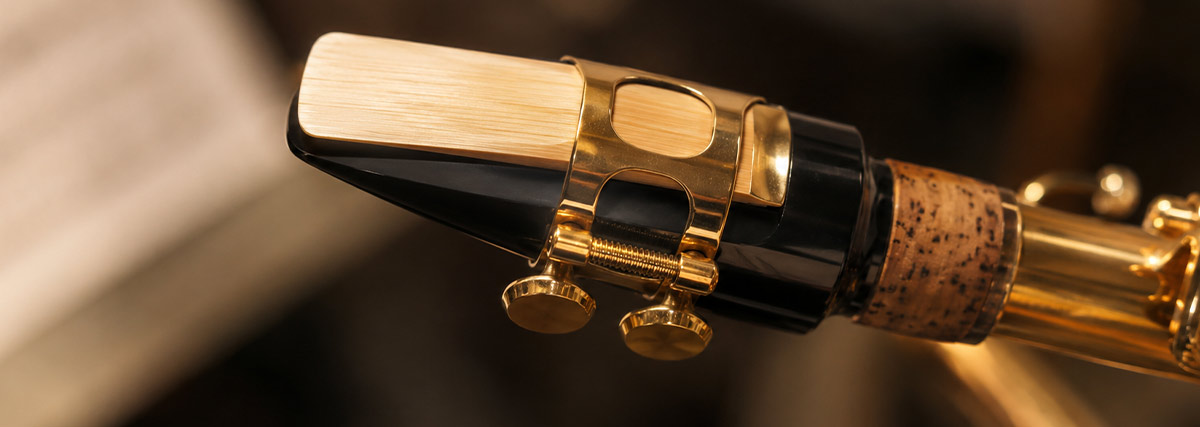
The reed may be one of the smallest parts of a saxophonist’s equipment, but its influence on sound and performance is enormous. Placed on the mouthpiece, this thin piece of cane is responsible for producing the vibration that gives the saxophone its voice.
A good reed can make playing feel effortless, responsive, and expressive, while an old or damaged reed can make tone production unstable and frustrating.
For beginners, however, knowing when to change a reed is not always obvious.
What makes a reed “good”?
How can a player tell when a reed is worn out?
And how should reeds be cared for in order to last longer?
This article explores these questions from several perspectives, importance of reed, the signs that indicate it is time to replace one, and practical tips for maintaining reeds in daily practice.
The Importance of the Reed
Although it is only a small piece of cane, the reed plays a central role in shaping a saxophonist’s sound.
The saxophone produces its voice through the vibration of the reed against the mouthpiece.
Its quality, condition and strength therefore directly influence the tone, response, articulation and control of dynamics.
A good reed allows the sound to speak with ease.
It helps the player produce a tone that is clear, focused, and expressive.
It also supports quick response, especially in delicate passages, soft dynamics, and difficult registers.
By contrast, a poor or worn-out reed can make the instrument feel resistant or unstable.
The sound may become airy, dull, or unfocused, and the player may need to use unnecessary effort simply to produce a clean tone.
The strength of the reed is also an important factor.
A softer reed may seem easier to play, especially for beginners.
However, if it is too weak, the sound may become thin or unstable.
A stronger reed can offer greater resistance and projection, but if it is too hard for the player, it may make articulation heavier, reduce flexibility and cause fatigue.
Choosing a reed is therefore not about finding the strongest reed, but the one that best suits the mouthpiece, embouchure, air support and musical needs of the player.
Even with a good saxophone and a good mouthpiece, an unsuitable reed can limit the quality of the sound.
For this reason, understanding the reed is an essential part of learning the instrument.

Signs That You Should Change Your Reed
For beginners, a reed can often last up to a month, largely because practice sessions are usually shorter and less frequent.
Unlike advanced or professional players, who may practise for several hours a day, beginners tend to put less daily pressure on the reed.
Still, time alone should not be the only measure.
If the reed feels weak, sounds dull, becomes difficult to control, or shows visible damage, it may be time to replace it.
One of the clearest signs is physical damage.
Cracks, chips, a warped tip, or uneven fibres can prevent the reed from vibrating properly.
Even a small chip at the tip can affect response, tone quality, and articulation.
Once a reed is visibly damaged, it is usually better to replace it rather than continue forcing it to work.
Another sign is that the reed feels too soft.
Over time, a reed can lose its natural resistance.
When this happens, the sound may become thin, unstable, or too easy to overblow.
The player may feel that the reed no longer offers enough support, especially in louder dynamics or higher registers.
A worn-out reed can also make the sound dull or unfocused.
Instead of producing a clear and resonant tone, the instrument may sound airy, fuzzy, or flat.
The player may have to work harder to achieve the same quality of sound that previously came more naturally.
Articulation is another important indicator.
If tonguing becomes less clean, slower, or less precise, the reed may no longer be responding properly.
A good reed should allow the notes to speak clearly and immediately, especially in fast passages or repeated notes.
Finally, instability in the high register can suggest that the reed is reaching the end of its life.
If high notes become harder to control, crack more easily, or feel less secure than usual, the reed may be too worn to support the player’s air and embouchure effectively.

Conclusion
There is no single rule for how often a saxophonist should change a reed.
A beginner can sometimes use the same reed for several weeks, or even up to a month.
But the real answer depends on how often the musician practises, how the reed is maintained, and what the player feels and hears while playing.
Time can be a useful guideline, but it should never be the only measure.
A reed should support the player, not work against them.
When it begins to feel too soft, loses clarity, responds slowly, makes articulation difficult, or shows visible signs of damage, it is probably time to replace it.
Learning to recognise these signs helps beginners develop not only better equipment habits, but also a more sensitive ear and a clearer understanding of their own sound.
Ultimately, changing a reed is part of learning how to listen.
A good reed allows the saxophone to speak freely, helping the player produce a sound that is stable, expressive, and comfortable.
When the reed no longer helps the music flow, it is time to let it go and choose another one.
Related Articles :

How to plan your music practice sessions...
It's important to learn how to plan your instrumental work sessions. We are all subject to our own personal schedules, whether in terms of the organisation of our professional lives or our personal lives. [...]

Stage fright: a singer's worst enemy?
During my coaching sessions, one subject always comes up: "stage fright". Let's start by defining stage fright. What does the Larousse say: "Fear or irrational anxiety that someone experiences at the moment of appearing. [...]

Why choose the cello
Hello, my name is Benoît Chapeaux, cellist, and member of the National Orchestra of the Capitole of Toulouse for over two decades. [...]

How to play by heart
In Antiquity, anatomical treatises considered the heart as the seat of emotions, passions, will, courage, but also of thought, intelligence, and memory. [...]

The guitar
The technical and historical aspects of the guitar are often neglected by guitarists, whereas I believe it is essential to have a basic understanding of the "theoretical" foundations of the instrument one has chosen to play. [...]

Can anyone learn to sing?
The word chant comes from the Latin "cantus", meaning the song of a human, a bird, the sound of an instrument or a poem. A multitude of forms and genres have developed in the West [...]
SIMILAR ARTICLES