About the Author: Stefan Joubert

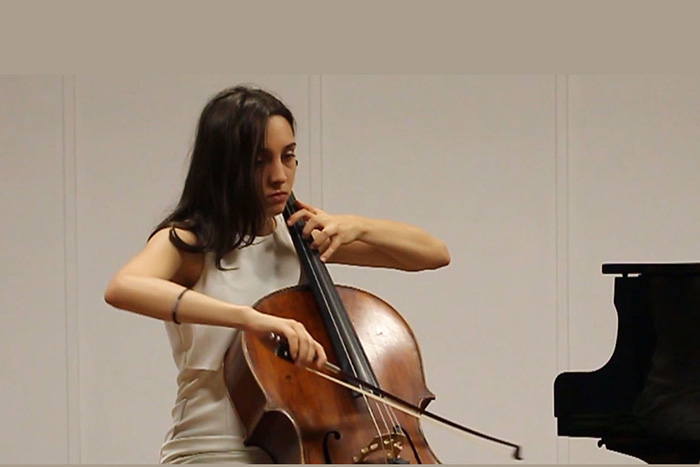
In this interview, Vlad Câmpean, a cellist trained at the Conservatoire National Supérieur de Musique et de Danse de Paris, looks back on his journey, from his first steps at the age of six in Cluj-Napoca to his experiences on stage.
He also shares his approach to teaching and his advice for adults who would like to start learning the cello.
Stefan Joubert: Could you tell us a little about yourself and how your journey with the cello began?
Vlad Câmpean : My journey with the cello began when I was six years old. My father was already an established and highly respected cellist, and growing up around his music naturally inspired me to follow in his footsteps.
What began as a childhood experience gradually became my passion and, eventually, my life's ambition.
Stefan Joubert: What was it about the cello that first drew you to it?
Vlad Câmpean : What first attracted me to the cello was its beauty, its elegance, and above all, its sound. The cello is often considered the instrument closest to the human voice, and I have always felt that it resonates with something deeply personal within us.
For me, the cello has a unique ability to express our inner voice and communicate emotions that words sometimes cannot.
Stefan Joubert: How did your musical training and career develop from there?
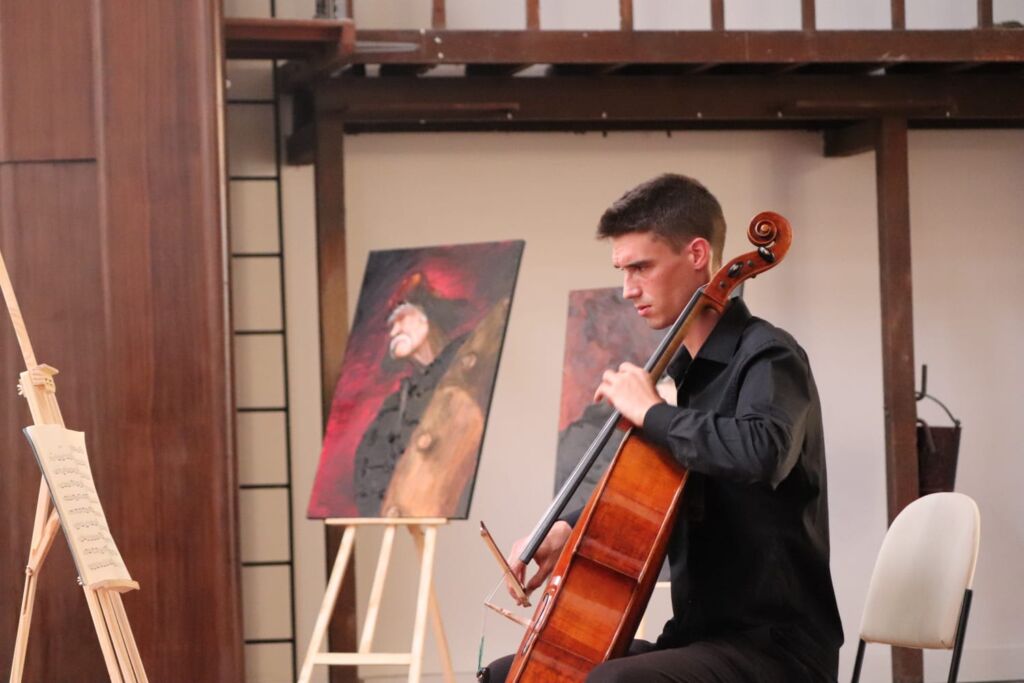
Vlad Câmpean : After completing my secondary music education in my hometown of Cluj-Napoca, Romania, I spent a year studying at the National University of Music in Bucharest. I was then accepted into the Conservatoire National Supérieur de Musique et de Danse de Paris, where I had the privilege of studying with Raphaël Pidoux and Edgar Moreau.
After completing my bachelor's degree, I continued my studies with Professor Edgar Moreau in the modern cello master's programme. This year, I was also accepted into the baroque cello master's programme at the same institution, in the class of Professor Bruno Cocset.
Alongside my studies, my main focus is to perform as much as possible, both as a soloist with orchestras and as a chamber musician and orchestral player. I believe that each of these experiences offers a different perspective on music and contributes to my development as an artist.
Stefan Joubert: Are there any composers, pieces or styles of music that have influenced you particularly strongly?
Vlad Câmpean : I have always felt particularly drawn to Baroque, Classical, and Romantic music. These three styles are distinct, each with its own language and aesthetic, yet they are deeply interconnected.
For me, they represent the essence of classical music. Exploring the relationships between them allows me to discover different ways of expressing musical ideas and to understand the cello's possibilities from several perspectives.
Stefan Joubert: What do you enjoy most about performing?
Vlad Câmpean : What I enjoy most about performing is the freedom it gives me. I can bring the ideas in my mind to life, shape them into something meaningful, and share something beautiful with an audience. There is something extraordinary about being able to transform an idea into sound in the moment.
I also love making music with other people. Whether I am performing chamber music or playing with an orchestra, the exchange of ideas and the experience of creating something together are among the most rewarding aspects of being a musician.
Stefan Joubert: Is there a concert or performance that has stayed with you over the years?
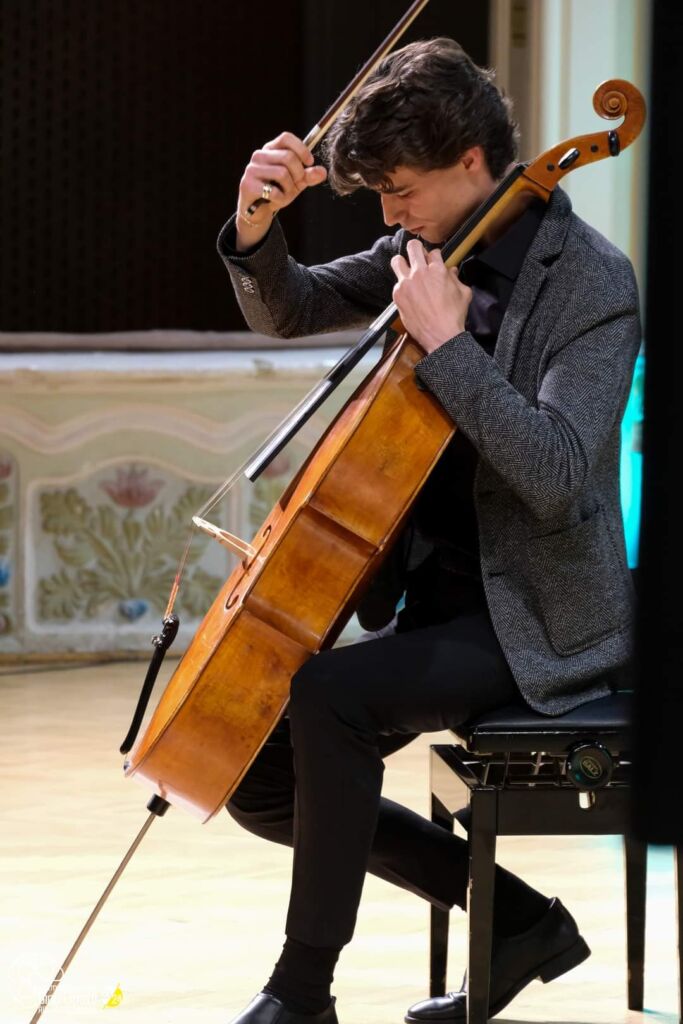
Vlad Câmpean : One of the most memorable performances of my life was when I appeared as a soloist with the Cluj-Napoca Philharmonic Orchestra, performing Camille Saint-Saëns's Cello Concerto in the city's Philharmonic Hall.
Cluj-Napoca is the city where I grew up, and I had spent years listening to great musicians perform on that very stage. To return to that hall as a soloist was an incredibly special experience. The concert was a great success, and at that moment, I felt a strong sense of certainty: this was what I truly wanted to do for the rest of my life.
Stefan Joubert: How do you usually prepare for an important performance?
Vlad Câmpean : I begin preparing well in advance, working on every aspect of the performance: technical, musical, physical, and psychological. I try to do as much as I can before the day of the concert so that I can feel prepared and confident when the moment arrives.
Once I step onto the stage, however, I try to let go of all that preparation and remind myself why I started playing music in the first place. I focus on how much I love what I do, relax as much as possible, and allow myself to perform with genuine joy. For me, the goal is to move beyond the work itself and rediscover the pleasure of making music.
Stefan Joubert: What do you enjoy most about teaching the cello?
Vlad Câmpean : One of the things I enjoy most about teaching is how much my students teach me in return. Whenever I explain or demonstrate something, I have to process the information carefully and look at it from different perspectives. I want to offer each student the most helpful and appropriate guidance possible.
Seeing how they respond to an explanation, understanding their difficulties, and finding new ways to communicate an idea all help me develop as a musician and a teacher.
Teaching has made me question and reconsider many aspects of my own playing, and I believe this continuous process of reflection is extremely valuable.
Stefan Joubert: What do students usually find most challenging when learning the cello?
Vlad Câmpean : I think the most challenging part, especially at the beginning, is building a solid foundation. Developing the right technique, posture, coordination, and habits takes time and patience. The process can sometimes feel repetitive or even boring, particularly when students are eager to play more advanced music.
However, these fundamentals are essential. Once the foundation is in place, students can begin to explore much greater possibilities and achieve things they might never have imagined. The early stages require patience, but they open the door to everything that follows.

Stefan Joubert: What would you say to an adult who feels they might be too old to start learning the cello?
Vlad Câmpean : It is never too late to start! If you love the cello and feel drawn to it, start now.
You do not need to become a professional musician to experience the joy of learning an instrument.
Music can bring fulfilment, curiosity, and beauty into your life at any age.
Stefan Joubert: The cello can look quite difficult at first. What would you say to someone who loves the sound of it but feels a little nervous about starting?
Vlad Câmpean : Everything beautiful requires a beginning, and most worthwhile things require hard work. If you love the sound of the cello and feel curious about learning it, do not let the initial difficulty discourage you.
Be prepared to work, to make mistakes, and to be patient with yourself. Learning the cello is a challenging journey, but I think that is part of what makes it so beautiful. The satisfaction comes not only from playing well, but also from discovering, step by step, what you are capable of achieving.
Stefan Joubert: What do you think matters most when learning the cello?
Vlad Câmpean : I believe that two things are essential: a solid foundation and a genuine passion for making music. The initial principles and technical fundamentals must be established carefully, because they will support everything that comes later.
But technique alone is not enough. Beyond the rules and exercises, it is the desire to make music, to express yourself, and to communicate something meaningful that gives the whole process its purpose.
Stefan Joubert: How do you adapt your teaching to students with different goals and levels of experience?
Vlad Câmpean : I adapt my teaching to the person in front of me and to their individual needs, experience, and ambitions. Before we begin working together, I consider it important to understand their goals and what they hope to achieve through learning the cello.
Some students may wish to pursue music professionally, while others simply want to enjoy playing an instrument. My role is to understand those differences and adapt my approach accordingly, helping each student progress in a way that suits their aspirations.
Stefan Joubert: Has teaching changed the way you think about music or the way you play yourself?
Vlad Câmpean : Absolutely. Teaching has helped me become much more aware of my own playing. When we perform, we often have an idea in our minds of how we sound, but hearing ourselves from an outside perspective can reveal differences between what we imagine and what actually happens.
Teaching encourages me to listen more carefully, analyse my choices, and become more conscious of every aspect of my performance. In this sense, it has not only helped me become a better teacher but has also influenced the way I approach my own musical development.
Stefan Joubert: Finally, what advice would you give to someone who would like to make the cello a bigger part of their life?
Vlad Câmpean : That's amazing! Go for it!
If you love music and you love the cello, this is only the beginning. Be curious, be patient, and allow yourself to enjoy the journey.
You do not need to know exactly where it will take you. Just take the first step and see where music leads you.
About Vlad Câmpean
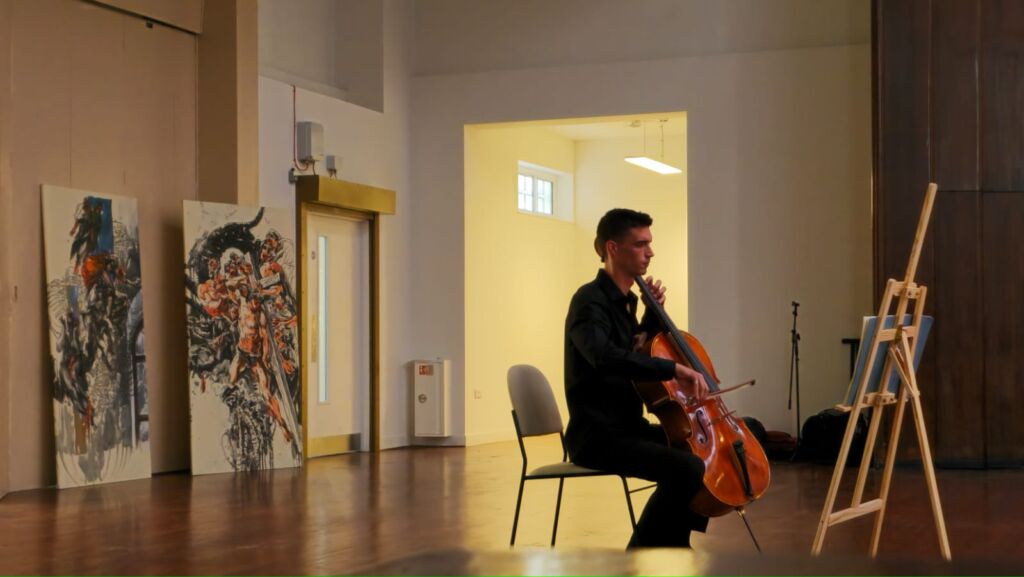
Vlad Câmpean is a Romanian cellist from Cluj-Napoca, where he began learning the cello at the age of six.
After a year of study at the National University of Music in Bucharest, he was admitted to the Conservatoire National Supérieur de Musique et de Danse de Paris, where he studied with Raphaël Pidoux and Edgar Moreau.
He is currently completing a master’s in modern cello with Edgar Moreau, as well as a master’s in baroque cello in the class of Bruno Cocset.
He performs as a soloist with orchestras, notably with the Cluj-Napoca Philharmonic Orchestra, with which he performed Camille Saint-Saëns’s Cello Concerto. He is also devoted to chamber music and orchestral playing.
Find him on Instagram : @vlad.campean
Would you like to learn the cello in Paris?
Whether you are a beginner or would like to return to the cello after a break, discover the adult lessons at the Paris Music Institute.

Best Practice Routines for Busy Adults
Finding time to practise the saxophone can seem almost impossible when you are juggling work, family, and other commitments. Choosing to learn a musical instrument while leading a busy life [...]

How Certain Foods and Drinks Affect the Voice
The inevitable question: what should singers eat and what should they avoid? What should you drink before a performance? How can you keep your voice well hydrated and healthy? [...]

When the Saxophone Became the Voice of 1980s Hong Kong Pop
For my grandfather, with all my love and in loving memory I returned to Hong Kong for two weeks for family reasons, in order to attend my grandfather’s funeral. During this period, I had the opportunity to reconnect with many relatives whom I had not seen for years. [...]

How to Keep Your Saxophone in Perfect Condition: A Guide to Care and Maintenance
The saxophone is both a delicate and complex instrument. For it to perform at its very best, thorough maintenance is essential. Regular care not only extends its lifespan, but also ensures it continues to perform reliably and beautifully. [...]

17 m², a saxophone, and letters of apology to the neighbours: the truth and poetry of an adult learning music in Paris
We often imagine that coming to study music in Paris feels like a scene from a film: sunlight on the Seine, the smell of coffee in the air, and the sound of a saxophone carried on the breeze. [...]
The Art of Listening in the Musician
Introduction: Listening — an Active Act at the Heart of Musical Expression In musical discourse, we readily speak of technique, interpretation, or practice strategies. Yet behind these visible concerns lies… [...]
SIMILAR ARTICLES