About the Author: Ester de Stefano
The piano has not always been played and studied in the same way; indeed, various more or less institutionalised schools have succeeded one another over time.
While it is true that every country has its own cultural and artistic tradition, the French piano tradition is captivating because it reveals almost opposing tendencies that continue to influence musical tastes today.
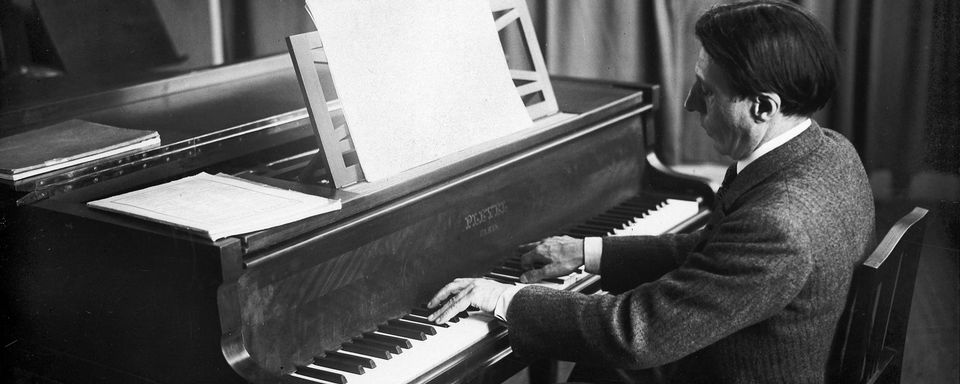
To discuss the French school, it seems necessary to mention the most important artistic figure on the twentieth-century French scene – Alfred Cortot.
First of all, it is worth briefly outlining the formal elements of the French school before 1900. It emerged in the early nineteenth century; the Conservatoire de Paris, the cornerstone of the French tradition, was founded in 1795. Of the great pianists who studied there, it’s undoubtedly the German pianist Kalkbrenner who had the greatest influence on piano teaching. It’s from his virtuosity and research into developing the hand’s capabilities that “jeu perlé” emerged. The « jeu perlé » is surely the technical feature that best represents the entire tradition of French pianists; this particular technique involves a broad articulation of the fingers, without the arms ever moving away from the keyboard. This produces a clear, crisp sound, with the notes gaining both clarity and definition, their succession evoking the row of pearls in a necklace. The famous short film made by Sacha Guitry showing Camille Saint-Saëns at the keyboard is an invaluable record, as it clearly illustrates this style of playing. This approach to the piano was, of course, chosen because of the piano models of the time. Typical pianos of the 1830s and 1840s, such as those by Pleyel or Erard, had very light actions that precluded any broad movements: players had to remain close to the keyboard.
This piano technique and expertise, instilled in several generations of musicians, gave rise to a school of its own. The last and best-known representative of this school was Marguerite Long (1874-1966). In an interview, it’s interesting to hear her observe that, with contemporary technique, few pianists keep their arms still and « their wrists close to the keyboard ». One way or another, we can say that the jeu perlé technique hasn’t changed in a century, even though musical styles themselves have.
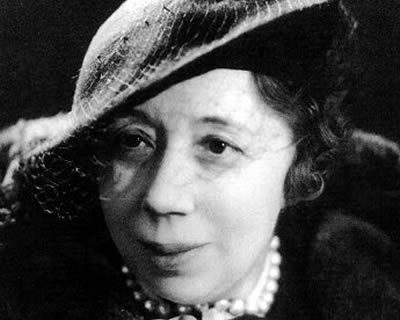
But this type of technique isn’t the only one of historical significance within the French tradition. Alfred Cortot’s technique was strikingly original for its time, departing from the tradition of « jeu perlé » by prioritising expressiveness over technical considerations.
From this perspective, the history of Cortot’s musical education was not only filled with successes and triumphs; it was also punctuated by failures and critical moments showing just how little this pianist was in tune with the French conservatoires’ « scholastic » tradition. He wasn’t a natural fit and didn’t conform to its expectations.
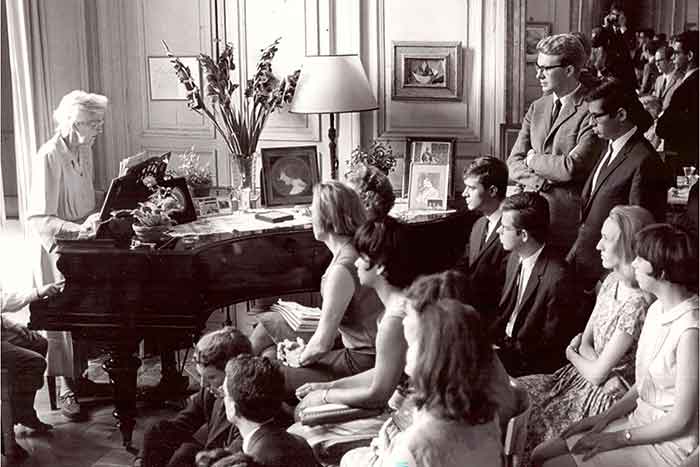
Cortot’s career was shaped by his close association with the circle of Chopin’s pupils. It was they who instilled in him a love of Romanticism and of the Polish composer, to whom Cortot remained deeply devoted throughout his life. Cortot founded the Ecole Normale de musique de Paris in 1919. His classes and teaching methods became legendary. Above all, Cortot prepared his pupils to study and perform an exceptionally wide variety of repertoire, as demonstrated by the available concerts and documents showing him play.
To understand Cortot’s teaching methods, one need only consult the critical editions he published with Salabert. More than scores, they are effectively research texts. Cortot required his pupils to have a very precise understanding of the piece and the context in which the composer’s work was written, to undertake a harmonic analysis of the work, and to draw relevant comparisons and essential distinctions between similar works. But What’s perhaps most interesting is that every passage is accompanied by poetic and technical notes, in which Cortot also suggests exercises for mastering the issue in question.
Finally, the essence of Cortot’s teaching philosophy can be found in his Principes rationnels de la technique pianistique.
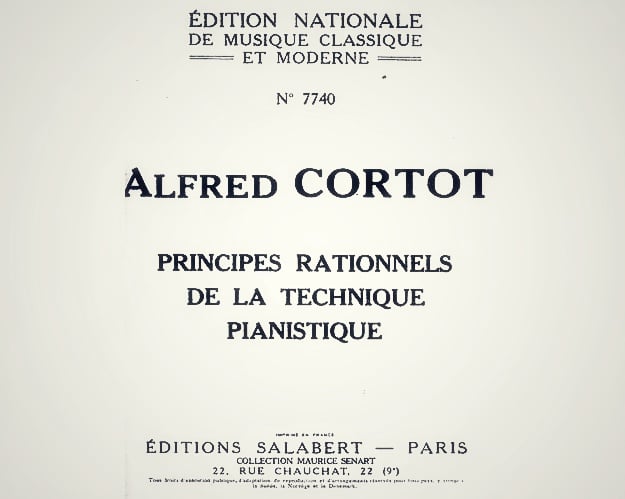
One of the most significant advances in an instrumentalist’s training was the replacement of mechanical practice—that is, a difficult passage’s repetition—with a reasoned study of the difficulty, reduced to the passage’s elementary principle. In this work, Cortot’s aim was to devise a general formula for resolving technical difficulties of every kind, reducing them to five essential categories.
The rational principles of piano technique are:
- – Égalité, indépendance et mobilité des doigts
- – passage du pouce (échelle- arpèges)
- – doubles notes et technique polyphonique
- – extensions
- – technique du poignet, exécution des accords
This volume therefore serves as a genuine vade mecum for pianists experiencing difficulty in performing a piece. By consulting it, they can look up the problem directly and see how Cortot attempts to resolve it; the considerable number of examples from other works, whether by the same composer or not, also helps them broaden their knowledge of the repertoire more quickly.
We could certainly say that some of the Cortot recordings available to us seem unusual, or even strange. This is a sign that tastes have changed. However, it seems to us that certain aspects of Cortot’s playing and some of his gestures are still worth assimilating today when performing works by Romantic composers—not only Chopin, but also Liszt.
In this respect, Cortot’s playing is an extremely valuable archive for anyone wishing to write the history of piano playing, since it is perhaps by watching and listening to Cortot that we can gain an idea of how Chopin wanted his pieces to be performed and even internalised.
Interview with cellist and teacher Vlad Câmpean
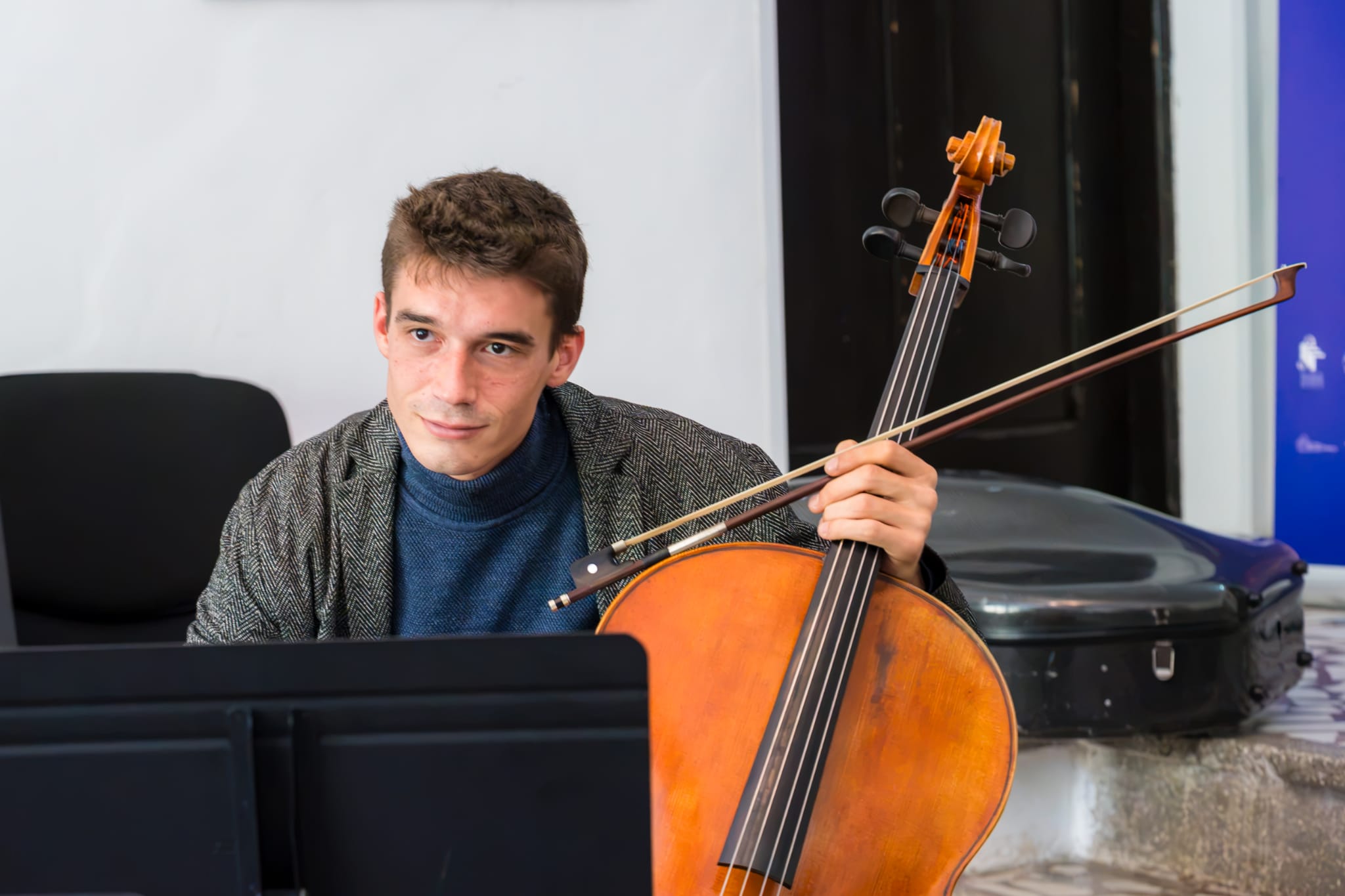
In this interview, Vlad Câmpean, a cellist trained at the Conservatoire National Supérieur de Musique et de Danse de Paris, looks back on his journey, from his first steps at the age of six in Cluj-Napoca [...]

How to Improve Intonation on the Saxophone
Unlike fixed-pitch instruments such as the piano, the saxophone does not produce perfectly stable intonation on its own. As a wind instrument, its pitch is constantly influenced by the player: [...]
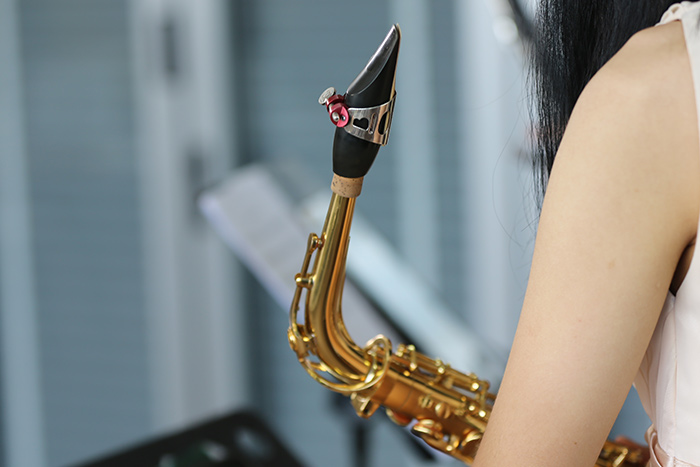
How to Choose Your First Saxophone Mouthpiece: A Beginner’s Guide
When buying your first saxophone, you often spend a great deal of time comparing different instruments. Yet one of the most important elements is often the mouthpiece. Although it is... [...]
How Often Should You Change Your Reed?
The reed is one of the most discreet elements of a saxophonist’s equipment, yet its influence on sound and playing quality is considerable. Placed on the mouthpiece, this thin strip of reed... [...]
Alto or tenor saxophone: which instrument should an adult choose in Paris?
Starting to learn the saxophone is an exciting decision. However, for many adult beginners, one question quickly arises: which instrument should you choose? Among the different types of saxophone, the alto... [...]
5 Important Points That Will Transform Your Performance
Playing an instrument in front of an audience can sometimes be a real challenge for some people, especially for those who have never had this opportunity before. Here, I am sharing 5 very important points that will help you [...]